User Experience (UX) and User Interface (UI) design
Designing an exceptional digital experience begins long before the first line of code is written. At Bluebrick Studios, we believe that truly successful websites, applications, and platforms are built on a foundation of deep user understanding, thoughtful design, and careful testing.
Our UX and design service cover the entire journey – from discovering who your users are and what they need, to designing visually compelling interfaces that make their goals simple to achieve. Each stage is collaborative, transparent, and focused on ensuring your digital product delivers measurable value for both your users and your business.
Summary
Great digital products start with understanding people. Our UX and UI practice turns user insight into clear journeys and accessible interfaces that look good, work beautifully and deliver measurable results.
This page outlines our approach: researching and testing with users, shaping wireframes and interactive prototypes, and crafting the final interface in Figma. We also cover interaction and service design to connect every touchpoint, explaining the stages we follow and why they reduce risk and rework.
UX research and testing
Through UX research, we can help you understand your users’ behaviours, needs, and motivations – insights that form the backbone of any effective digital product. Our goal is to help you create a user-centric website, app, or platform that makes life easier for your customers while also helping your business achieve its goals.
We use a blend of qualitative and quantitative methods to build a clear picture of your audience:
- Qualitative: Workshops, interviews, and hands-on usability testing help us uncover how users think, feel, and interact with your product. These sessions often reveal subtle friction points or opportunities for improvement that raw data alone can’t capture.
- Quantitative: Data analysis, analytics reviews, and market research allow us to validate findings at scale, identify trends, and prioritise design changes with confidence.
UX testing allows you to see your product through your users’ eyes. By observing how real people navigate and interact with your site or app, we can spot barriers that prevent them from reaching their goals – whether that’s making a purchase, finding key information, or completing a task. We can then use these insights to refine the experience, improving usability and flow so that both your customers’ needs and your business objectives are met.

Prototyping and wireframing
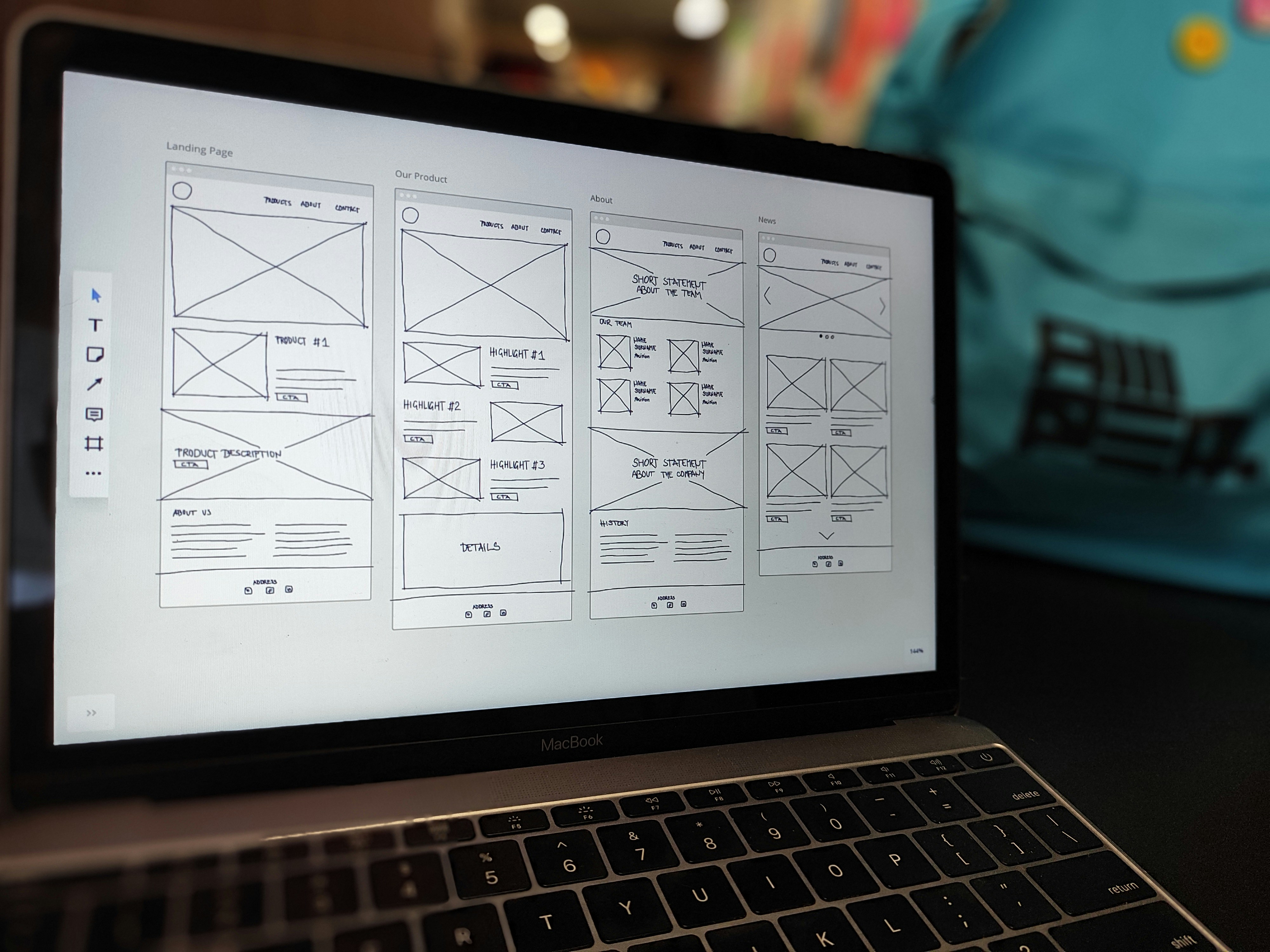
Once we’ve established the UX requirements through research and testing, we translate those insights into wireframes – visual blueprints that map out the structure, hierarchy, and functionality of your digital product.
Wireframes are an essential step before moving into visual design, helping to:
- Plan and validate your user journeys identified during research.
- Confirm content placement and page structure.
- Test the flow of interactions without the distraction of colour or imagery.
From there, we often build interactive prototypes – clickable models of your product that simulate how users will navigate and engage with it. Prototypes provide a realistic sense of how the final application will work, enabling you and your stakeholders to explore its features before a single pixel is designed or a line of code is written.
This iterative, hands-on process ensures that everyone involved – designers, developers, clients, and stakeholders – has a shared understanding of the experience we’re creating.
UI and visual design
Once the discovery and wireframing phases are complete, we move into UI (User Interface) and visual design. This is where your digital product starts to take shape visually, translating the structure and flow from the UX phase into an engaging, brand-aligned interface.
We can work with our in-house design team or collaborate with your existing creative partners to develop a look and feel that reflects your brand identity while enhancing usability. Every design decision – typography, colour palette, button style, spacing – is made with your users’ needs in mind.
Throughout the process, we use collaborative tools such as Figma, which allow for real-time feedback, comments, and iterations. This ensures you have visibility at every stage, from initial style concepts to fully designed screens.
Before handing over to development, we test the designs within a prototype environment, validating the user journeys and confirming that the visuals support both the user experience and business objectives

Interaction and service design
A great interface is more than just attractive screens – it’s the way your product behaves and responds to users in real time. Interaction design focuses on these micro-interactions and touchpoints: the visual cues, animations, transitions, and feedback that guide users through your product and make it feel intuitive and responsive.
From the way a button changes state when hovered over, to how a form field responds to an error, interaction design helps create a smooth, satisfying experience. We design these details with care, ensuring they are purposeful, accessible, and consistent across your product.
Service design takes a broader view. While UX focuses on the digital product itself, service design maps out the entire end-to-end experience – across every channel and interaction a user might have with your business. This could include:
- How your website integrates with offline services.
- The customer support process after a user submits an enquiry.
- The notifications and follow-up emails a user receives post-purchase.
By aligning all touchpoints into a cohesive, well-planned service journey, we ensure your users enjoy a consistent, seamless experience – whether they’re engaging online, on mobile, or in person.
Case Studies
At Bluebrick Studios, we’re proud of the digital solutions we’ve delivered for our clients. From complex e-commerce migrations to bespoke business applications and high-performance mobile apps, our work reflects our commitment to quality, collaboration, and measurable results.
Why our UX and design approach works
At Bluebrick Studios, we don’t view UX and design as separate disciplines – they work hand-in-hand. A well-researched user journey informs a logical wireframe, which in turn shapes a polished, accessible interface. By testing and validating at every stage, we avoid costly rework, reduce development risk, and create products that users genuinely enjoy.
Our process is:
- Collaborative – We involve clients at every stage, ensuring your vision is reflected in the final product.
- Evidence-based – We use research and data to back every decision, avoiding guesswork.
- Iterative – We design, test, and refine continuously to deliver the best possible experience.
- Holistic – We consider the full service journey, not just the interface in isolation.
Whether you’re creating a brand-new product or improving an existing one, our UX and design services ensure your digital presence is purposeful, user-friendly, and designed to perform.